They Burned Our Field.
We Planted It Again.
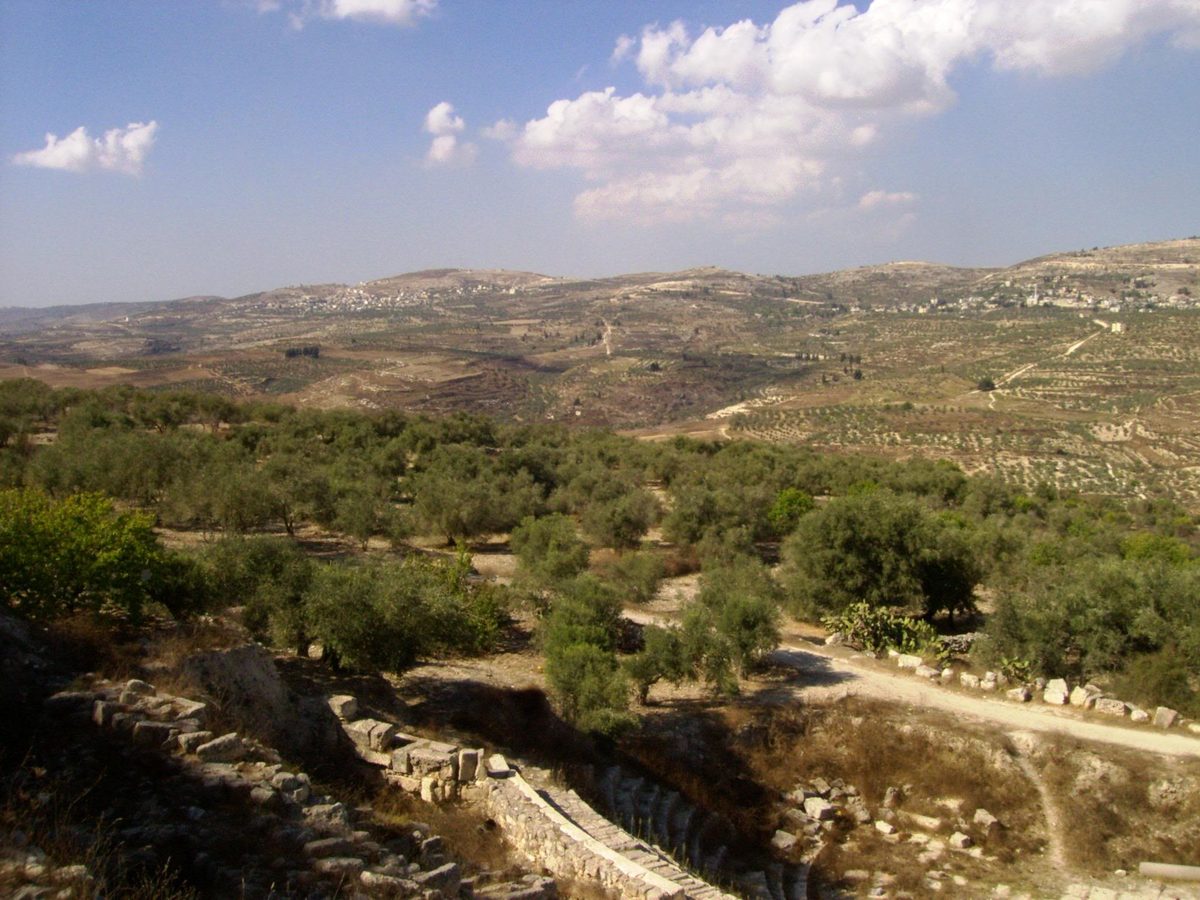
The first thing you notice about the Levy farm is the quiet. It sits on a ridge above ancient Shiloh, where the land tilts east toward the Jordan Valley and the morning light arrives before it reaches anywhere else in the country. Below the farmhouse, stone terraces descend in neat steps, each one laid by hand — some of them three thousand years ago, some of them last spring.
Yoav Levy is fifty-three. His hands are cracked and stained the color of the earth they work. He walks the terraces the way a captain walks a deck — checking the pistachio saplings in the upper rows, brushing fingers across the olive bark in the middle tier, stopping at the grape trellises that line the lowest shelf before the slope drops away. Each terrace tells a chapter. Some chapters are older than writing.
The Levy family arrived in Shiloh in 1994. Yoav's father, Moshe, had been an engineer in Petach Tikva — good salary, air conditioning, forty-minute commute. He drove up to Shiloh on a Friday, saw the terraces, and didn't go back. Within a year, he had transplanted the family, sold the apartment, and put the first pistachio trees into soil that hadn't been farmed in generations.
"People thought he was crazy," says Yoav, pouring thick Turkish coffee on a porch that overlooks roughly half of the biblical narrative. "An engineer, planting trees. But he said the terraces were calling. That sounds mystical, but if you stand here at sunrise, you understand. The terraces are an invitation. Someone built them to be farmed. Walking away from that felt wrong."
✦ ✦ ✦Moshe planted pistachios because they are patient trees. They take seven years to bear fruit — a commitment that filters out anyone not serious about staying. He planted olives because the hills are made for them, the same Souri and Nabali varieties that have grown here since the Iron Age. And he planted grapes because, well, this is wine country. It has been for three millennia. The ancient wine presses carved into the bedrock below the farm still hold rainwater every winter.
By 2003, the farm was producing. Small harvests — a few hundred kilos of pistachios, enough olives to press oil for the family and neighbors, a modest grape yield that went to the local cooperative winery. Moshe had found his rhythm. Yoav, fresh from the army, joined him on the terraces.
Then the first fire came.
Arson. The investigators confirmed it within hours — accelerant traces at multiple ignition points along the property line. It was methodical, deliberate. Forty olive trees, each one planted by Moshe's hands, each one named after a family member or a memory. The tree called "Savta Miriam" — grandmother's olive — was the oldest, nearly nine years in the ground. It burned to a black stump.
Moshe didn't speak for two days. On the third day, he drove to the nursery in the Jordan Valley and came back with fifty saplings. Not forty. Fifty.
"He said we don't replace what was lost," Yoav remembers. "We add to it. That's not revenge. That's agriculture. A farmer always plants more than he harvests, because some of it is for the next generation."
✦ ✦ ✦The second fire came in 2015. This time they took the pistachio orchard — the crown of the farm, the trees Moshe had waited seven years to see bear fruit. Fourteen years of patience, gone in a single night. The fire moved so fast that the heat cracked the ancient terrace stones. Yoav found pistachio shells scattered in the ash, perfectly split open by the heat, as if the trees had tried to release their seeds one last time before dying.
Moshe was seventy-one by then. He sat on the porch for a week, staring at the blackened terraces. Yoav thought it was over — that his father would finally say enough, finally let the land win.
On the eighth day, Moshe walked down to the burned orchard with a shovel. He didn't say anything. He just started clearing ash. Yoav followed. Then Yoav's wife, Shira. Then the children. By noon, neighbors had driven up from Shiloh with seedlings, tools, water tanks. By evening, the first new trees were in the ground.
"I planted for the third time," Moshe told a local reporter that week. "The land doesn't burn. Only the trees burn. The land is still here, and it still wants to grow things."
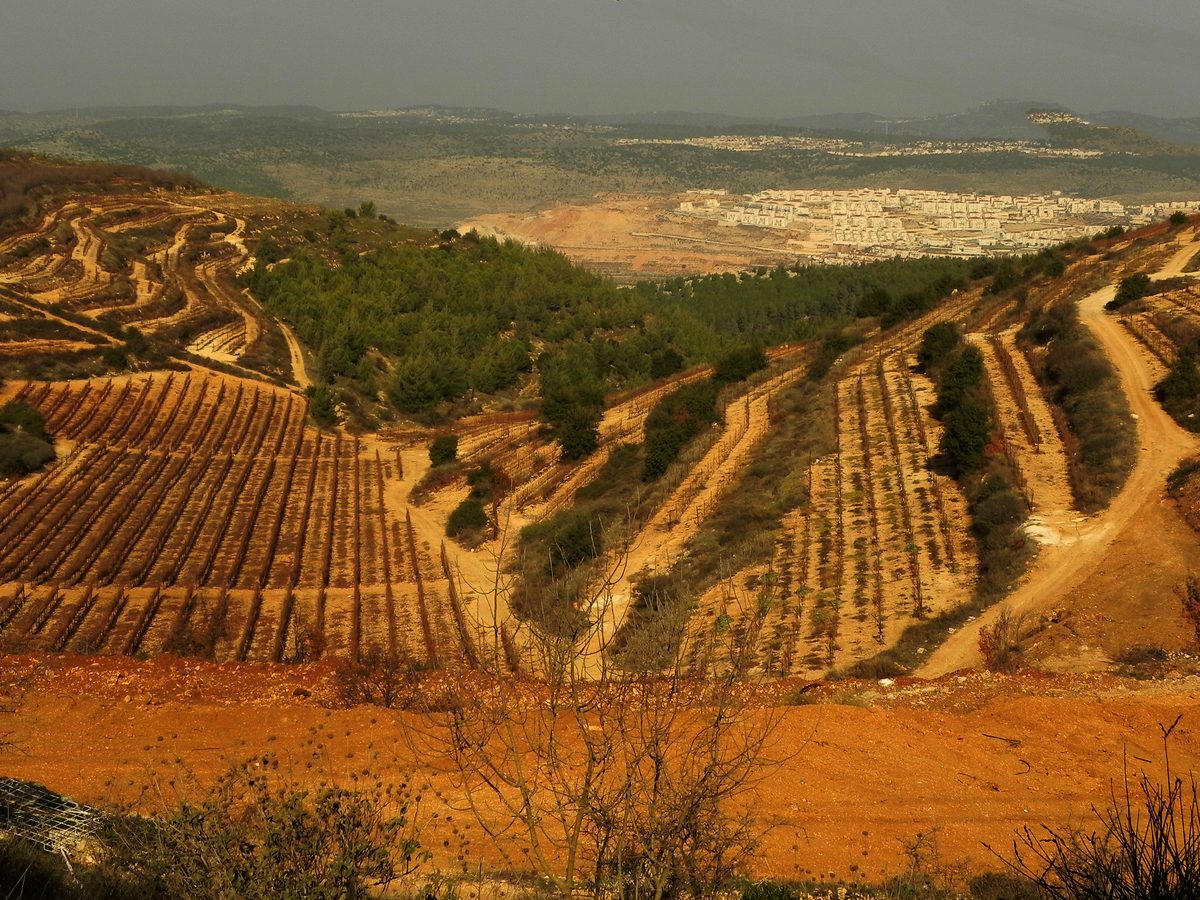
Terraced vineyards in the Judean hills — the same agricultural method used on the Levy farm above Shiloh.
Moshe passed away in 2021, at eighty. He didn't live to see the pistachio trees bear fruit again — that takes seven years, and the replanting was in 2015. But Yoav was there in 2022 when the first green clusters appeared. He picked the first handful and drove them to his mother's apartment in Petach Tikva, the city his father had left three decades before.
"She held them and cried," Yoav says quietly. "She said they tasted like Moshe's hands."
✦ ✦ ✦The third fire came in August 2024. A coordinated arson attack hit farms across the northern Shomron — Yitzhar, Itamar, and Shiloh in the same week. The Levy farm lost its hay stores, two equipment sheds, and the young grape vines on the western terrace. A season's hay, months of preparation, years of vine growth.
This time, Yoav didn't wait. The morning after the fire, before the embers were cool, he was on the phone with the newly formed Farm Association — the first organized body representing agricultural families in Judea and Samaria, established in 2024. Within a week, volunteers from fifteen communities had come to help rebuild. Within a month, the grape vines were replanted. The Farm Association documented the damage, connected Yoav with donors in America who funded new irrigation equipment, and helped file the insurance claims that the family had been navigating alone for twenty years.
"For the first time, we're not alone," Yoav says. "For thirty years, each farmer was on his own hilltop, fighting his own fires. Now there's a network. When one farm burns, twenty farms respond. That changes everything."
Today the Levy farm covers forty-five dunams across seven terraces. The pistachios are producing again — three hundred kilos last season, with projections for five hundred next year. The olive grove has ninety trees, the largest it's ever been. The replanted grape vines are two years in, still young, still building root. Yoav's eldest son, Noam, nineteen, works the farm between university semesters. His daughter, Tamar, fifteen, tends the herb garden that Shira started on the uppermost terrace — za'atar, rosemary, sage, thyme — the same herbs that grow wild on the surrounding hills.
On a clear morning — and most mornings here are clear — you can stand on the Levy porch and see the archaeological excavation at Tel Shiloh, where the Tabernacle stood for three hundred and sixty-nine years. You can see the community of Shiloh itself, houses and playgrounds and a school where children learn a few hundred meters from three-thousand-year-old wine presses. You can see the new farms on the neighboring ridges, the ones established since October 7th — fifteen new agricultural operations in the region, families who decided that the right response to fire is seed.
Yoav doesn't think of himself as making a political statement. He thinks of himself as a farmer. The terraces were built to hold soil and water and root. That's what they still do. Whether the trees on them are six years old or six hundred, the purpose is the same. The land was made to grow things, and the people on it were made to tend what grows.
On the lowest terrace, where the grapes were replanted after the 2024 fire, Yoav has placed a small stone marker. It doesn't have a name or a date. It has one line, chiseled in Hebrew:
Stories like this, every week.
Farm portraits, community stories, winery features, and heritage walks from Judea & Samaria. Beautiful. Real. Free.
Subscribe to the Heartland